How geopolitical events become economic and financial consequences
The Week for Business · Saturday 14 – Friday 20 November 2026
Hormuz shipping stays disrupted, and Europe heads into winter with gas storage below last year's level.
One page each week for businesses in Europe and the Middle East: what happened, what it means for costs, supply, risk and rules, the markets, and the dates to watch. Every source shown.
Previous weeks: 7 – 13 November 2026
Maps
Interactive maps of alliances, energy, trade, technology and power, from 1945 to today.
Graphs
The figures behind the maps, starting with energy. Pick a year, or compare two.
Newsletter
The monthly Letter: how the month’s geopolitical events reached markets. Each Letter has its own page.
Services
What STRATEGOS does for your business
We show how global developments translate into your company’s own operational and financial exposures.
Strategos Maps
Power, energy, trade, technology and alliances: who depends on whom, and who stands with whom.
Power Map: latest event shown on 23 November 2026.
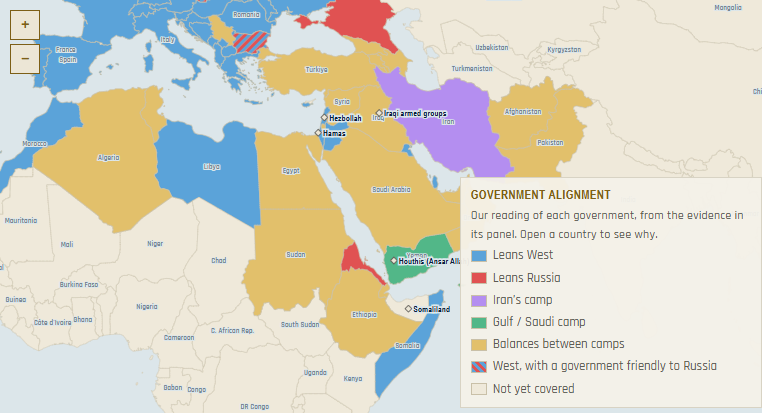 Alliances and PactsWho stands with whom: where 97 governments lean (West, Russia, China, Iran or the Gulf, or balancing between them), with the evidence for each, plus the defence treaties, alliances and blocs that tie countries together.Open the map →
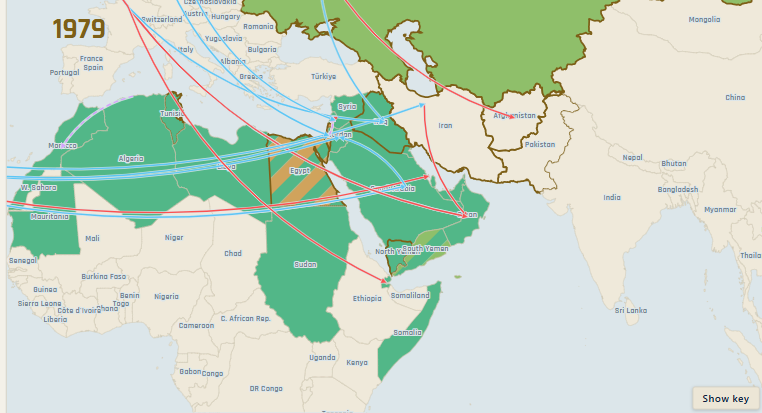 Timeline 1945–todayHow the world changed from 1945 to today: alliances, who governed, who supported whom across borders — world, region and country, every change dated and sourced.Open the map →
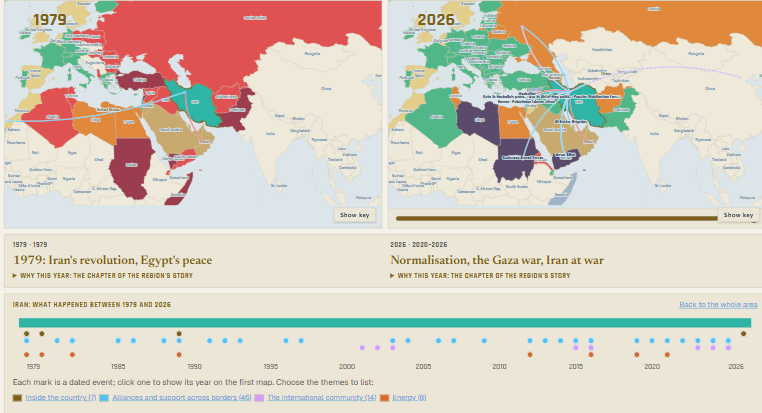 Compare two yearsTwo years side by side, one country in focus: what changed inside it, in its alliances and in the support it gave and received — to read today against a past moment.Open the map →
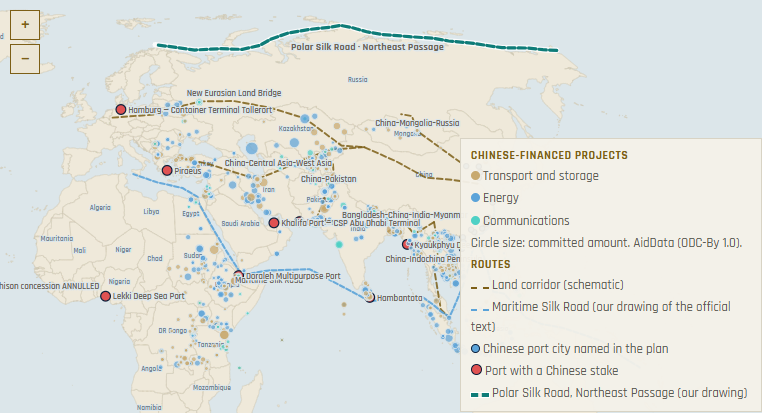 China & the Belt and RoadThe Belt and Road as China’s own texts describe it: the six land corridors, the Maritime and Polar Silk Roads, China’s partners in its official wording, and what countries owe China, with the “debt trap” debate set out from both sides.Open the map →
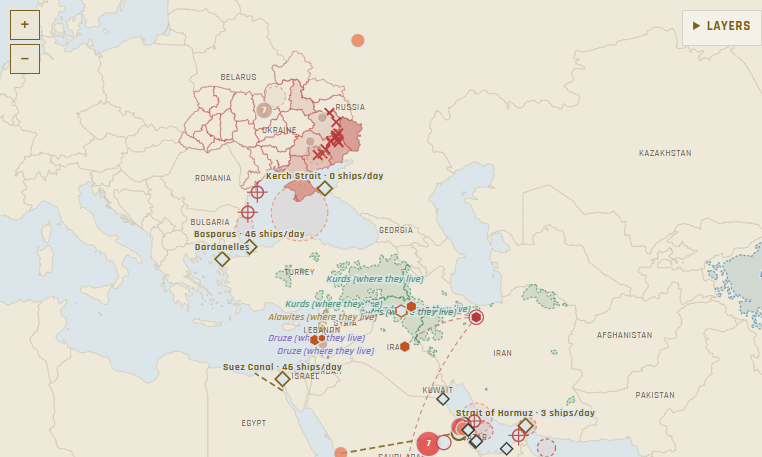 Power MapTracks geopolitical flashpoints, military activity, foreign military presence, armed groups and threats to maritime security, showing where tensions are concentrated and how they may affect regional and international stability.Open the map →
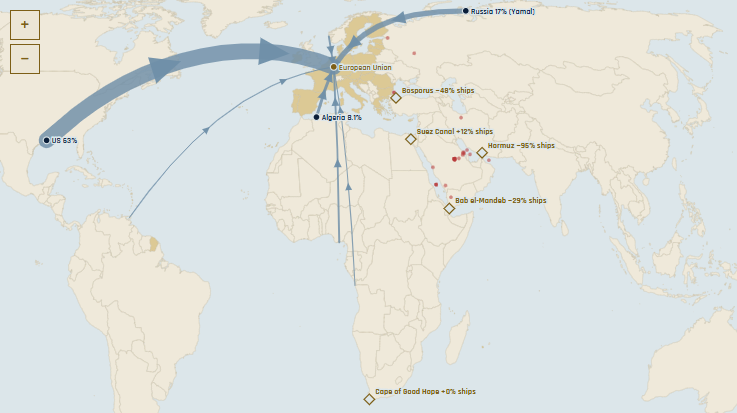 Energy MapMaps global oil and gas relationships, major suppliers and critical transportation routes. It highlights exposure to strategic chokepoints such as the Strait of Hormuz, the Suez Canal and the Black Sea, helping readers understand how geopolitical disruptions can affect energy security and markets.Open the map →
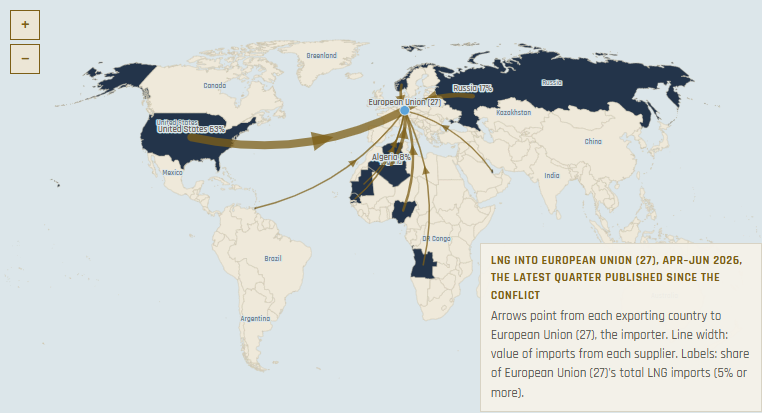 Trade MapExplores international trade relationships, critical minerals, tariffs and strategic connectivity initiatives, including the Belt and Road Initiative and the India–Middle East–Europe Economic Corridor. It illustrates how countries are reorganising trade networks, developing alternative routes and managing economic dependencies.Open the map →
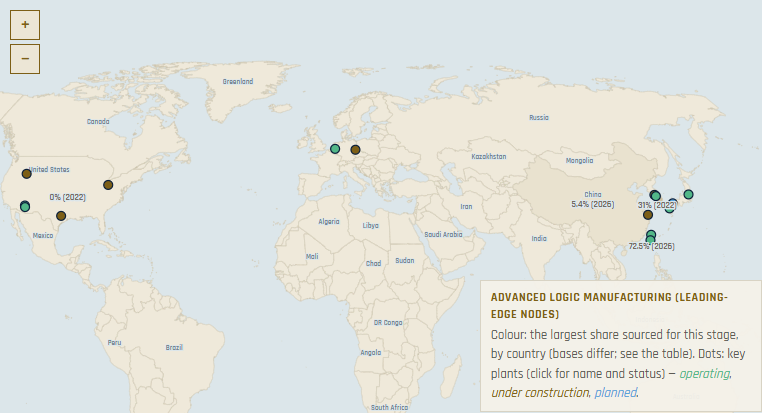 Technology MapExamines semiconductor manufacturing, advanced technology supply chains, export controls and critical minerals. It highlights the geographical concentration of technological capabilities and the strategic vulnerabilities shaping competition in artificial intelligence and advanced industries.Open the map →